25 ans après l'Initiative de Bamako, nous continuons notre exploration de la participation communautaire en Afrique. Le Dr. Frederick Golooba-Mutebi est politologue, il est Senior Research Fellow à l'École de l'Environnement et du Développement de l'Université de Manchester et chercheur associé au Programme sur la Politique Energétique de l'Afrique à l'Overseas Development Institute de Londres. Il a publié de nombreux articles sur le système de santé et la gouvernance locale, avec une concentration particulière sur l'Ouganda, le Rwanda, le Sud Soudan et l’Afrique du Sud.
Jean-Benoît Falisse: Vous avez travaillé sur les questions de participation communautaire depuis quelques années maintenant. Qu’est ce qui a déclenché votre intérêt pour ce sujet?
Fred Golooba-Mutebi: Mon intérêt découle de la connaissance que j'avais de la façon dont la société dans laquelle je suis né fonctionne. En ayant grandi dans cette société, je savais à peu près comment les gens ressentaient et pensaient différentes choses. Un aspect clé de la participation est qu'elle suppose que les communautés, où qu'elles se trouvent, on toujours envie de s'affirmer vis-à-vis de leur dirigeants ou de personnes en position de pouvoir et d'autorité. Ma propre société est très hiérarchisée. Les gens traitent généralement leurs leaders avec déférence. Même lorsque l'on ne respecte pas un leader ou que l’on a un problème avec lui, on est plus susceptible d'éviter ce leader que de l’affronter. L'idée de la participation, avec des gens qui demandent des comptes à leurs dirigeants, est donc une proposition difficile. Traditionnellement, les dirigeants locaux ne rendaient pas directement compte à la communauté. Ils rendaient compte à leurs chefs, aux supérieurs de ceux-ci, et finalement au roi. En des temps éloignés (durant la période précoloniale), avant que la région où je suis né ne devienne plus peuplée, les gens pouvaient facilement déménager d'une région à l'autre. Cette possibilité leur permettait de quitter les zones présidées par des dirigeants qu'ils n'aimaient pour aller dans des zones avec des dirigeants qui avaient la réputation d'être bon. Pour un dirigeant, la conséquence d’être rejeté par la population qui avait « voté avec ses pieds » était souvent d’être finalement destitué par le roi. En bref, ma connaissance de ma propre société était en contradiction avec la théorie de la participation populaire. Cela a déclenché chez moi un intérêt pour moi pour étudier dans quelle mesure cette participation restait possible. J'ai trouvé que cela ne l’était pas vraiment. Qu'on le veuille ou non, les traditions et les manières de voir et de faire les choses vivent très longtemps. La participation communautaire est un principe clé de l'Initiative de Bamako. Aujourd'hui, il semble que l'Initiative de Bamako n'a pas atteint ses objectifs. Quelles en sont les principales raisons d’après vous? Il y a plusieurs raisons. La première est que la prestation de services en matière de soins de santé échoue en raison de facteurs qui vont bien au-delà de ce à quoi la participation peut répondre ou de ce qu’elle peut rectifier. Je pense par exemple à la disponibilité des médicaments et des ressources humaines dans les zones rurales et à la supervision professionnelle nécessaire à la prestation des soins selon les normes établies. L'idée de vouloir «capturer» pour le secteur public l’argent que les gens dépensaient dans les prestations privées était une bonne chose. Cependant, la faiblesse de l’Initiative de Bamako réside dans l'hypothèse que les gens seraient autant disposés à payer pour des soins dans les établissements publics que dans des établissements privés. L’expérience en Ouganda a montré que ce n'était certainement pas le cas. Pour beaucoup de gens pauvres, payer pour les soins dans les établissements publics en plus de payer des impôts était une contradiction dans les termes. « Pourquoi payer des impôts et ensuite payer pour des services publics? » Les gens savaient que la vocation des propriétaires d'établissements privés était de «faire des affaires» et donc de faire un profit, mais l'idée que les établissements publics fassent de même était en conflit avec la compréhension de beaucoup de gens de ce que les gouvernements sont censés faire, qui est de fournir des services de soins de santé gratuits. Plutôt que de payer pour des services publics de qualité inférieure, les gens préfèrent naturellement une prestation privée de meilleure qualité et plus réactive. La prolifération des établissements privés de toutes sortes rend la possibilité de «sortir» (exit) de l'offre publique assez facile. Sur les marchés de la santé peu réglementés des pays pauvres, les prestataires privés sont plus qu'heureux de fournir à leurs clients les services qu'ils veulent, pas nécessairement ceux dont ils ont besoin. Dans les années 1990, Susan Reynolds Whyte a constaté que, dans les régions rurales en Ouganda, les gens pouvaient se présenter dans les « pharmacies » et demander ce qu'ils voulaient comme médicaments, dans les proportions qu'ils s'étaient fixés, et en cohérence avec le montant d'argent qu'ils avaient. L'Initiative de Bamako est donc en deçà de ses aspirations parce qu'elle était fondée sur des présomptions plausibles mais discutables. Pourquoi des propositions de participation communautaires telle que l'Initiative de Bamako apparaissent-elles à la fin des années 80 '? Pourraient / devraient elles avoir été conçues différemment? Ces initiatives sont apparues au moment où il y avait un besoin urgent de changement. L'offre publique de services de santé dans la plupart des pays en développement était catastrophique. Il y avait une nécessité d'une réflexion radicale, de trouver les moyens d'aboutir à une amélioration. Oui, ces stratégies auraient pu être conçues différemment. Le principal problème, pour autant que je le comprenne, était l’approche « one-size-fits-all » (« taille unique »), suivant laquelle des initiatives de développement sont introduites dans tous les pays de la même façon, sans égard à aucune considération contextuelle. Clairement, chaque pays est différent, et tous les pays ne peuvent pas suivre le même chemin, dans les mêmes voies prédéterminées et promues par l'industrie du développement. Chaque pays devrait essayer de faire ce qui convient à son contexte plutôt que de s’aligner sur les soi-disant «bonnes pratiques». Si des pays comme le Rwanda ont eu plus de succès que d'autres dans la réforme de leurs systèmes de santé et de leur économie, c'est parce que, comme la recherche du Programme politique énergétique de l'Afrique à l'Overseas Development Institute l’a découvert, ils ont choisi le « meilleur ajustement » (best fit) plutôt que pour les « meilleures pratiques » (best practices). Ces expériences nous fournissent des arguments pour remettre en cause la tendance au sein de l'industrie du développement à promouvoir des solutions universalistes aux problèmes de développement et de gouvernance. Vous avez été une voix critique de la participation communautaire et vous venez d'Ouganda - contrairement à un bon nombre d'éminents chercheurs sur la participation de la communauté qui viennent de l'Amérique du Nord / Europe de l'Ouest. Pensez-vous qu'il y a une "doxa" (occidentale) de la participation communautaire? Était-ce surtout une lubie des bailleurs de fonds? Comme je l'ai dit au début, mon scepticisme quant à la participation découle de ma compréhension de la façon dont la communauté dans laquelle je suis né et ai grandi fonctionne, et comment des choses telles que le leadership y sont comprises. Il n'a jamais été tiré d’une théorisation de ce qui est bon pour les communautés pauvres. Le problème avec l'industrie du développement est qu'elle est dominée par des théoriciens dont la compréhension du monde ou des mondes qu'ils veulent changer ou améliorer est limitée et informée par des visites de courte durée et dans par des interactions superficielles avec les personnes dont ils veulent améliorer l’existence. Il me semble que le problème est vraiment le libéralisme naïf des étrangers bien intentionnés mais mal orientés qui travaillent avec des initiés locaux (des insiders) qui sont trop disposés à jouer le jeu sans se poser de sérieuses questions. À mon avis, les Rwandais sont vraiment dans le bon en refusant d'être traînés/accompagnés de force, en remettant en question et en rejetant ce qu'ils croient ne fonctionnera pas pour eux et en choisissant ce qui fonctionne pour eux. Pensez-vous qu'il serait judicieux d'envisager d'utiliser des mécanismes de participation communautaire en Amérique du Nord / Europe de l'Ouest? Je ne le pense pas. Les mécanismes participatifs exigent beaucoup de temps des gens. Vous ne pouvez pas attendre des gens dans une communauté qu’ils organisent toutes ces réunions et prennent toutes les décisions; quel temps leur reste-t-il pour vivre? J'ai vécu en Europe. Je n'ai jamais été assis dans une seule réunion communautaire et si quelqu'un avait exigé moi d'assister à autant de réunions que ce que l’on demande à ma mère dans notre village en Ouganda, je n'aurais jamais eu le temps de le faire. Ma mère assiste à très peu de réunions pour les mêmes raisons. Dans les quartiers de Londres où j'ai vécu, les services fonctionnaient parce que le Royaume-Uni dispose d'un Etat qui fonctionne. C'est de cela que l'Afrique et le monde en développement a besoin, et non de la participation communautaire. Cela ne veut pas dire que la participation n'a pas de valeur. Elle peut renforcer un Etat solide dans lequel les gens peuvent se lever et exprimer leur mécontentement quand ils le jugent nécessaire. Cela ne peut marcher que dans un contexte où l'Etat est réactif. Sinon, les gens ne voient pas de raison de s'engager dans une action citoyenne qui ne donne aucun résultat. Si je comprends bien, la participation communautaire dans les services sociaux en Ouganda a également été très fortement encouragée par l'Etat. Quelle en était la raison? Est-ce que cela n’a pas un peu plus affaibli l'Etat? En tant que mode de développement, la participation a coïncidé avec la montée en puissance du Mouvement de résistance nationale (NRM). La direction du NRM avait testé l'intérêt des citoyens à participer à la prise de décision pendant la guerre civile quand ils ont organisé les citoyens en conseils locaux afin de leur permettre de prendre en main des choses telles que la sécurité ou le recrutement de soldats dans les zones qu’ils contrôlaient. Ces arrangements ont assez bien fonctionné et le NRM a cherché à les appliquer à la gouvernance d'après-guerre, une fois qu'il a pris le pouvoir. Le fait que ces arrangements offraient une fenêtre d’opportunité pour pénétrer les campagnes, saper les structures traditionnelles d’autorité, et renforcer leur Etat central n’est pas étranger au choix de cette stratégie. En outre, la prise du pouvoir du NRM coïncide avec la période du début de l'après-guerre froide quand la démocratisation et l'accompagnement des phénomènes tels que la décentralisation étaient à l'ordre du jour des donateurs. En ce sens, il y avait une coïncidence d'intérêts entre la direction du NRM et la communauté des donateurs. Deux décennies plus tard, nous savons qu'il y a eu beaucoup de naïveté en supposant que les gens ordinaires voulaient et étaient capables de surveiller leurs dirigeants et de diriger leurs services de base. Je ne pense pas que la participation affaiblit l'Etat, c’est plutôt qu’elle ne fait rien pour renforcer des Etats déjà faibles. Elle a permis à certains gouvernements de se soustraire à leurs responsabilités de faire fonctionner les choses et à mettre la charge sur ses citoyens qui ne possédaient ni l'envie ni la capacité pour le faire. Dans un article récent, vous affirmez que «la coordination et la supervision verticale et horizontale et la solidité de la mise en place effective de mécanismes de rendre compte» sont les clés de la prestation efficace des services sociaux. Quel est exactement le rôle des communautés là-bas? Quel est l'avenir de la participation communautaire dans la prestation des services sociaux? Oui, en effet, ce sont les clefs à mon avis. Les communautés devraient avoir des moyens par lesquels elles peuvent mettre la pression sur leurs dirigeants si elles jugent que c’est la chose à faire ce moment. Cela pourrait se produire si, par exemple, elles trouvent que la qualité de la prestation de service est en dessous de leurs attentes. Pour ce faire, des campagnes de sensibilisation doivent être organisées afin de s'assurer que les gens connaissent leurs droits. C'est plus ou moins la situation dans les démocraties occidentales. Les gens ne sont pas obligés - et je dis bien obligés - de participer à la prise de décision à l'échelle où les gens dans les pays pauvres le sont. Toutefois, lorsque les dirigeants prennent des décisions qu'ils jugent inacceptables, ils ont le droit de manifester ou de s'engager dans des formes d'action citoyenne qui leur permettent de transmettre leur message ou messages à ceux à qui ils sont destinés. Cependant, il ne faut pas s'attendre à ce que le changement survienne du jour au lendemain. Le genre de militantisme que nous voyons dans les démocraties avancées s’est enraciné dans de longues périodes de temps. Il me semble que la participation populaire est rarement considérée comme un acte politique. De votre recherche et d'expérience, diriez-vous que la participation populaire est un acte politique? Si nous sommes d'accord que la participation est destinée à influencer la prise de décision et dans un même sens l'allocation des ressources, alors il s'agit de faire un choix entre ou parmi des idées concurrentes. C’est donc un acte politique. C'est dans un sens aussi une des raisons pour lesquelles la participation populaire est une proposition difficile dans des contextes où les relations entre les dirigeants et le peuple qu'ils dirigent sont très hiérarchisée et n'entraînent pas de confrontation directe ou de contestation.
Jean-Benoît Falisse We continue our exploration of community participation in Africa, 25 years after the Bamako Initiative. Dr. Frederick Golooba-Mutebi is a political scientist and Honorary Senior Research Fellow at the School of Environment and Development, University of Manchester and Research Associate of the Africa Power and Politics Programme at the Overseas Development Institute in London. He has widely published on health, local government and other topics, with a concentration on Uganda, Rwanda, South Sudan and South Africa. Jean-Benoît Falisse: You have been working on issues of community participation for quite a few years now. What sparked off your interest for this topic? Fred Golooba-Mutebi: My interest stemmed from the knowledge I had of how the society I was born in works. I had grown up in it and knew roughly how people felt and thought about different things. A key aspect of participation is that it presumes that communities, wherever they are found, always want to assert themselves over their leaders or people in positions of power and authority. My own society is very hierarchical in orientation. People generally treat leaders with deference. And even if one does not respect a leader or has an issue against him or her, they are more likely to avoid than confront them. The idea of participation with people holding their leaders to account is therefore a difficult proposition. Traditionally local leaders did not account directly to the community. They accounted to their superiors, the senior chiefs, and ultimately to the king. In distant (pre-colonial) times, before the region I was born in became more populated, people could easily move house from one area to another one. The possibility of shifting enabled them to vacate areas presided over by leaders they did not like to those with leaders who had a reputation for being good. The consequences for a leader whose people “voted with their feet” included being deposed by the king. In short, my knowledge of my own society conflicted with the theory of popular participation. That triggered an interest in me to go and investigate the extent to which it was feasible. I found that it really is not. Like it or not, traditions and ways of seeing or doing things live very long. Community participation was a key principle of the Bamako Initiative. Today is seems the Bamako Initiative hasn't quite reached its objectives. What do you think are the main reasons? There are several reasons. One is that service delivery in health care fails because of factors that go way beyond what participation can address or rectify such as the availability of medicines and human resources in rural areas and the professional supervision necessary for delivering care according to established standards. The idea of wanting to ‘capture’ for the public sector money people were spending on private provision was a good one. However, its weakness lay in assuming that people would be as willing to pay for care in government facilities as they were in private ones. Experience in Uganda has shown that it certainly wasn’t the case. For many poor people, paying for care in government facilities alongside paying taxes was a contradiction in terms. “Why pay taxes and then pay for services as well?’ People knew that owners of private facilities were ‘doing business’ and therefore had to make a profit but the idea that government facilities should do the same clashed with many people’s understanding of what governments are supposed to do, which is provide free health care services. Rather than pay for inferior public services, people naturally preferred the higher-quality and more responsive private provision. The proliferation of private facilities of all sorts made the ‘exit’ from public provision fairly easy. Private providers in the highly unregulated health markets of poor countries are more than happy to provide their clients with the services they want, not necessarily those they need. In the 1990s, Susan Reynolds Whyte found that people in rural Uganda could turn up at drug shops and ask for whatever medicines they wanted in proportions they themselves had determined, in line with the amount of money they had. The Bamako Initiative therefore fell short of its aspirations because it was founded on plausible but questionable presumptions. Why did community participation propositions such as the Bamako Initiative appear in the late 80s’? Could/should they have been designed differently? The initiatives appeared at the time they did because there was a desperate need for change. Public provision of health services in much of the developing world was abysmal. There was need for radical thinking, to devise ways of bringing about improvement. Yes, they could have been designed differently. The key problem, as far as I can figure it out, was the one-size-fits-all approach, whereby development initiatives are introduced in every country in exactly the same way, without regard to contextual considerations. Clearly countries are different and cannot possibly follow the same path in the pre-determined ways the development industry promotes. There is something to be said for each country trying to do what fits its context rather than going for so-called ‘best practice’. If countries such as Rwanda have been more successful than others in reforming their health systems in ways that have proved to work for them, it is because, as research by the Africa Power and Politics Programme at the Overseas Development Institute discovered, they went for “good fit” rather than ‘best practice’ solutions. They provide us with the grounds for questioning the tendency within the development industry to promote universalist solutions to problems of development or governance. You have been a critical voice of community participation and incidentally you come from Uganda - unlike quite a few prominent researchers on community participation who come from North America/Western Europe. Do you think there is a (Western) "doxa" of community participation? Was it mostly a donor fad? As I indicated at the beginning, my skepticism about participation stemmed from my understanding of how the community I was born in and grew up in functioned, and how things such as leadership were understood. It never derived from theorizing about what is good for poor communities. The trouble with the development industry is that it is dominated by theorists whose understanding of the world or worlds they want to change or improved is limited and informed by short visits and to a large extent superficial interactions with the people whose lives they want to improve. It seems to me as if the problem really is the naïve liberalism of well meaning but misguided outsiders working with insiders who are too willing to play along without asking some hard questions. In my opinion the Rwandans get a lot right by refusing to be dragged along, by questioning and rejecting things they believe will not work for them and going for what works. Do you think it would make sense to consider using similar mechanisms of community participation in North America/Western Europe? I don’t think so. For one thing, participatory mechanisms demand lots of people’s time. You cannot expect people in a community to hold all these meetings and make all the decisions; what time would they have left for ‘living’? I have lived in Europe. I never sat in a single community meeting and if anyone had required me to attend as many meetings as my mother in the village in Uganda is required, I would never have had the time to do so. My mother attends very few meetings and misses most for the same reasons. Things in the areas of London where I lived, worked the way they did because the UK has a functioning state. That is what we need in Africa and the developing world, not participation. This is not to say that participation has no value; it does. It can complement a strong, functioning state when people could rise up and express dissatisfaction whenever they may judge it necessary. And in that case, it can only be sustained in a context where the state is responsive. Otherwise people will see no reason to engage in citizen action that produces no results. If I understand correctly, community participation in social services in Uganda was also quite heavily promoted by the state. What do you think is the reason? Wasn't it in a sense weakening the state a bit more? As a fashion in development, participation coincided with the rise to power of the National Resistance Movement (NRM). The NRM leadership had tested the benefits of citizens participating in decision making during the civil war when they organized citizens into local councils in order to enable them to take charge of things such as security and also to vet recruits into the rebel army. The arrangements worked well enough for the Movement to want to apply them to post-war governance once they seized power, not least because they offered a window of opportunity for the state to penetrate the entire countryside, undermine traditional authority structures and entrench itself. Further, the NRM’s rise to power coincided with the early post-cold-war period when democratization and accompanying phenomena such as decentralization were top on the agenda of the donor community. In this sense there was a coincidence of interests between the NRM leadership and the donor community. Two decades down the road, we know that there was a great deal of naivety in assuming that ordinary people actively wanted and were capable of watching over their leaders and questioning as well as directing their activities. I do not think participation weakened the state. Rather, it did nothing to strength states that were already weak. It allowed governments to shirk their responsibility for making things work and to load it onto citizens who possessed neither the inclination nor the capacity for doing so. In a recent article, you argue that "vertical and horizontal co-ordination, inspection and supervision, and the strength of accountability enforcement mechanisms" are the keys for efficient social services delivery. What is exactly the role of communities there? What is the future of community participation in social services delivery? Yes, indeed, those are the keys in my opinion. Communities ought to be accorded avenues through which they can pressurize their leaders if they judge that to be the thing to do at any one moment. This could happen if, say, they find the quality of service provision is below their expectations. For this to happen, educational campaigns should be mounted to ensure they know it is their right to do so. This is more or less the situation in Western democracies. People are not required – and I mean required – to participate in decision making on the scale those in poor countries are. However, when leaders make decisions they find objectionable, they have the right to demonstrate or engage in forms of citizen action that put their message or messages across to whoever they are intended for. Even then, we should not expect this change to happen overnight. The kind of activism we see in advanced democracies took root over long periods of time. It seems to me that popular participation is rarely considered as a political act. From your research and experience, would you say that popular participation is a political act? Well, if we agree that participation is intended to influence decision making and in a sense even resource allocation, then it is about making a choice between or among competing ideas. It is therefore a political act. That in a sense is also a reason why it is a difficult proposition in contexts where relations between leaders and the people they lead are highly hierarchical and don’t entail direct confrontation or contestation.
Les participants du cours « Politique de Santé » Le 26 avril 2013, dans le cadre d’un module de cours sur la gestion des connaissances, les participants à la formation courte « politiques de santé » à l’IMT d’Anvers ont organisé un débat autour du film « Ah les indigents ! » (1). Ce film raconte la conduite d’une recherche-action au Burkina Faso. Dans ce blog post, les participants rapportent le contenu des discussions et donnent quelques conseils à tous ceux qui voudraient exploiter ce film (en libre accès sur youtube) dans un cadre didactique ou de plaidoyer. Depuis l'adoption des politiques de recouvrement des coûts des soins en Afrique subsaharienne dans les années 80, la problématique de l'utilisation des services de santé par les indigents est devenue un enjeu plus visible. Le débat est entretenu par les résultats controversés des politiques de paiement des soins par les usagers, y compris pour certains groupes vulnérables bien plus larges (enfants, femmes…). Ces dernières années, des expériences de réforme du financement des systèmes de santé ont été initiées en Afrique. Certaines s’attellent à mieux concilier les objectifs d'efficacité et d'équité, notamment en prenant en compte le problème de l'accès aux soins et de l'utilisation des services de santé par les indigents (nous pensons par exemple aux expériences des fonds d’équité). Les défis sont connus : Qu’est-ce que l’indigence ? Qui sont les indigents ? Comment les identifier ? Où sont-ils, où vivent-ils ? Qui va payer pour leur prise en charge ? Une recherche-action… un film… un débat Ce sont à ces questions qu’une recherche-action mise en œuvre au Burkina Faso dans le district sanitaire de Ouargaye, a tenté de répondre. Un film documentaire intitulé « Ah les indigents ! » a été réalisé sur cette recherche-action par Malam Saguirou, avec le concours financier du CRDI du Canada. La recherche-action, elle-même, était conduite par l’équipe du Professeur Valéry Ridde de l’Université de Montréal. Ce court-métrage reprend les étapes de la recherche-action et montre comment les communautés ont été en mesure de se mobiliser pour favoriser l'accès aux soins des indigents. Il démontre que l’identification communautaire est une bonne solution pour identifier les personnes les plus démunies en milieu rural, tout en mettant le doigt sur le dénuement extrême de l’individu et sur le droit à la dignité. Il illustre également comment des communautés peuvent mettre en place des mécanismes de solidarité, sans intervention financière externe. Ce documentaire de 26 minutes a été présenté aux étudiants et enseignants de l’Institut de Médecine Tropicale d’Anvers le 26 avril 2013. Il a ensuite donné lieu à un débat sur la problématique des indigents dans les pays pauvres notamment africains. Enseignements du débat Sans conteste, le film a été apprécié. Il touche à différentes problématiques et nous a amené à discuter de nombreuses questions. Certaines étaient spécifiques au sujet : l’acceptabilité de l’indigent par le personnel de santé, la problématique de la qualité au rabais pour les indigents, la pérennité de la prise en charge des indigents par la communauté, les mécanismes mis en place en cas d’indigence temporaire… D’autres étaient plus systémiques : la viabilité financière des formations sanitaires, l’efficacité de la participation communautaire et le fonctionnement des COGES, les soins centrés sur le patient, la qualité des soins, la problématique de l’accès aux soins de santé par les populations dans les pays à faible revenu… Certaines questions, enfin, dépassaient le seul secteur de la santé : l’acceptabilité sociale de l’indigence, la solidarité dans la communauté pour la prise en charge de ses indigents, les enjeux politiques liés au droit à la santé et la lutte contre la pauvreté, la prise en compte des déterminants sociaux de la santé dans les solutions à rechercher pour la prise en charge des indigents, la protection sociale des indigents au-delà de leurs besoins pour la seule santé… L’auditoire était international (il rassemblait des participants à différents programmes de cours à l’IMT): les différentes contributions des participants ont souvent été étayées par des références aux expériences dans les pays d’origine (Burundi, Bénin, RDC, Sénégal, Burkina Faso, Maroc, Madagascar, Guinée…). A l’issue de ce débat que nous avons animé, il ressort qu’il est possible au niveau des communautés et partant à plus grande échelle de définir l’indigence, de sélectionner les indigents sur la base de critères consensuels et de les prendre en charge. Le principal message du film Selon nous, le principal message du film est toutefois peut-être ailleurs que dans les enjeux techniques: il montre, que même avec peu de moyens, il est possible de mener des actions spécifiques en faveur des plus pauvres, et ce chacun à notre niveau. Il nous rappelle notre dimension humaine, nous fait prendre conscience de la situation que vivent les indigents et nous oblige à nous engager, à mener des actions en faveur des plus pauvres. De fait, l’aide aux indigents ne nécessite pas de grandes révolutions sociales ou politiques, des réformes techniquement complexes. Elle repose sur notre empathie pour les exclus. Si chacun, à son échelle peut faire quelque chose, comme techniciens, nous pouvons aussi lutter pour dépasser l’immobilisme et impulser la dynamique pour asseoir un véritable mécanisme d’assistance sociale pour la prise en charge des indigents. C’est le principal signal lancé par la Déclaration faite à Marrakech en septembre 2012 par les participants de l’atelier sur l’équité dans la couverture sanitaire universelle : comment atteindre les plus pauvres ? Par ailleurs, il ne revient pas qu’au secteur de la santé seul de se consacrer à cette question. L’Etat doit se réinvestir dans cette responsabilité qui fait partie de ses prérogatives en impliquant tous les secteurs pour garantir le droit à la santé, le droit à la dignité humaine à tous comme stipulé dans toutes les Constitutions de nos pays. Nos conseils pour la meilleure exploitation didactique du documentaire Le film « Ah les indigent ! » est touchant, stimulant et efficace. Le film peut avoir de nombreux usages (y compris comme outil de réflexion plus méthodologique, par exemple sur la recherche-action !) et devrait pouvoir séduire différents types de publics. Nos conseils à nos lecteurs qui souhaiteraient exploiter ce film dans le cadre d’un cours, d’un plaidoyer ou d’une réunion de travail autour de l’indigence sont les suivants : (1) après le film, donnez la parole à l’auditoire en leur posant d’abord la question « qu’est-ce qui vous a interpelé, ému ? » - faites jouer l’émotion; (2) ensuite, seulement, abordez les (nombreux) aspects plus techniques ; (3) en général, exploitez l’expérience des gens dans la salle – si vous avez quelqu’un qui a travaillé activement auprès des pauvres (par exemple, un assistant social) veillez à ce qu’il ou elle partage son expérience ; (4) prévoyez une équipe d’au moins 3 personnes pour l’animation : le facilitateur, une personne au tableau pour noter les réflexions et les organiser ; une personne pour faire circuler le micro ; (5) faites une synthèse en dégageant les grands messages à retenir ; (6) invitez chacun à exploiter ce film à son propre niveau. Nous n’avons pas rencontré de difficultés techniques pour projeter ce film : il vous suffit d’avoir un projecteur, un ordinateur, un système audio et une bonne connexion à internet (vous pouvez aussi télécharger le film, si Media Player est installé sur votre ordinateur). Le film est en partie en langue locale, il existe en version sous-titrée français et anglais. Voilà, vous êtes fin prêts : qu’allez-vous faire à votre niveau ? Note: (1) Le module de cours "gestion des savoirs et décisions politiques" aborde les différentes stratégies pour le meilleur partage des connaissances en santé publique, y compris les média sociaux. Ce cours a été coordonné et développé par les professeurs Bruno Meessen (IMT, Anvers), Valéry Ridde (Université de Montréal) et Christian Daguenais (Université de Montréal). N'hésitez pas à les contacter si le sujet vous interpelle.
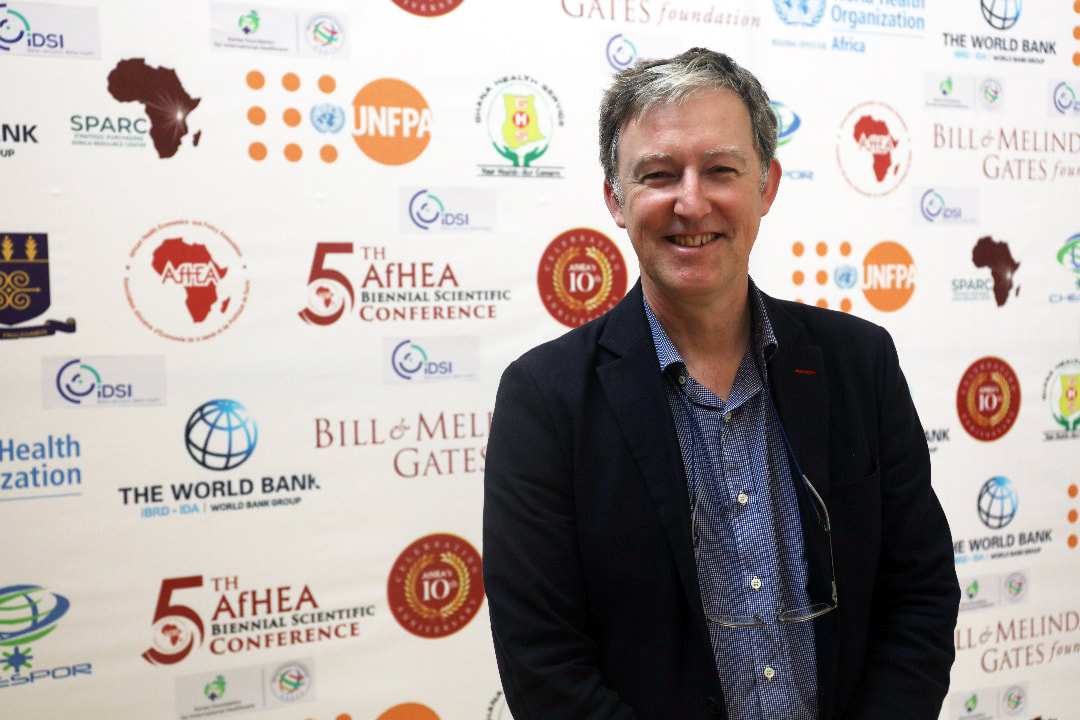
Arjanne RietsemaTwo weeks ago, the World Bank organised the Africa Health Forum in Washington DC. Arjanne Rietsema attended the event as member of the Civil Society Consultative Group, a group set up by the World Bank to engage with the civil society on it health, nutrition and population action. Arjanne is country director of Cordaid in Zimbabwe, where Cordaid assists the Ministry of Health in implementing a PBF program. She reports on the meeting. Objectives of the Africa Health Forum 2013 The forum (for those of you who are on Twitter: #africahealth) built on the Tunis declaration and it was a rapid response to the call from African leaders. The Forum, with the theme of “finance and capacity for results,” and a cross cutting focus on country level institution building, had the following objectives: A. To learn from Ministers of Finance and Ministers of Health and to explore policy options to ensure that investments in health produce sustainable systems and results, with more reliance on domestic funds. Themes for dialogue were: a1. Policies to achieve results and lasting impact, taking into account the following: trends in health outputs and outcomes, improvement in quality of services, and diversity of results across countries. a2. Innovative domestic and external financing approaches: current experiences and policy actions including risk pooling, revenues from taxes, and revenues from investments in natural resources. B. To formulate and adopt practical mechanisms for the World Bank, in collaboration with the African Development Bank and partners in Harmonisation for Health in Africa (HHA) to support the improvement and expansion of the capacity of country institutions to use development assistance more efficiently. Themes for dialogue: b1. Emerging operational and policy modalities for support: Public Private Partnership, Results Based Financing and Program for Results. b2. Growing knowledge and evidence base on what works, how it works and how well it works (including the use of measurement tools such as Service Delivery Indicators; systematic interventions to improve quality of services; and impact evaluation). Dynamic of the forum I promised colleagues @Cordaid to report the event via Twitter and that might be the reason that what I recall is slightly fragmented but you can still follow the entire panel presentations via the internet if you are in a part of the world with good connectivity. The high profile presenters mentioned the importance of value for money, raised the question of what comes first, Health or Wealth, stressed the need for alignment and harmonisation between donors and the need for transparency and accountability. The President of the World Bank, Dr Jim Yong Kim, said that not one disease is more important than another, for which he received applause… When and where did I hear about the importance of Health System Strengthening before? He also said that time has come not only to end poverty but also to share prosperity. When he ended I felt like the most important part of his speech was yet to come and that was the “how” part. The tight planning of the panels ( or were it the elaborated discourses from politicians who tend to prefer talking over listening..;) did not allow for discussion, so we remain with some food for thought on the many good examples of progress made in Africa and how to scale those up. E.g. use natural resources to support the budget for health, use tax money, establish a levy or health fund, share the financial burden, minimise out of pocket expenditure, Results Based Financing, all means to help achieving #UHC. Questions You may wonder what has been the use of this certainly expensive and time consuming gathering. There were no measurable outcomes, but very often during these events business is being done in the lobby. We may just hope that dialogue around the themes happened there. The background documents are brief but serve the purpose of focusing attention on some topics including Results Based Financing. I believe that the PBF CoP, which already plays a role in continuous advocacy for RBF, could be a resource to tap next time (if there is any new edition of this forum). There was a lot of talk on Universal Health Coverage, but few people mentioned it directly. Why did the Forum not use Universal Health Coverage as a theme? Let us hope we will not treat UHC as another vertical programme (or need a second Forum…). As argued by Jurrien Toonen a year ago on this blog, RBF experts need to step up the effort on linking RBF to UHC. It will be a great opportunity to scale up RBF. Ending poverty, including providing access to good quality health services, is a process. Part of the process seem to be forums where people talk too long or too short in 140 characters using hashtags#. Well and good, hashtags# come and go with Forums or other events. The hashtag #africahealth has almost died. Time to #putinpractice, a hashtag that should not die!
Gyuri Fritsche
On 26 April Robert Soeters, overwhelmed and blushingly accepted a Royal decoration from the hands of Mayor Jozias van Aartsen in an annual public ceremony colloquially called the lintjes regen (the decorations rainfall). A close group of friends, colleagues and members of family had organized and requested the nomination without Robert’s knowledge, and had lured him from Africa (where he is mostly found) to The Hague (where he sometimes resides) for a work meeting after which he was ushered in front of the decorating official. Robert has worked his entire professional career with passion on refining a sophisticated public health intervention that has gained currency as ‘Performance-based financing’. Please join us in calling Robert from now on ‘Sir Robert’!
Ce 26 avril, submergé par l'émotion et rougissant, Robert Soeters a accepté une décoration royale des mains du Maire Jozias van Aaartsen lors d'une cérémonie publique annuelle familièrement appelé le lintjes regen (pluie des décorations). Un groupe d'amis proches, collègues et membres de la famille avait organisé et proposé sa nomination, à son insu. Ils ont dû le tirer d'Afrique (où il se trouve principalement) pour le faire venir à La Haye (où il réside parfois) pour une réunion de travail, après quoi il a été conduit devant l'officiel en charge des décorations. Robert a travaillé toute sa carrière professionnelle avec passion à peaufiner une intervention sophistiquée de santé publique qui est connue aujourd'hui comme le « financement basé sur la performance ». S'il vous plaît joignez vous à nous pour appeler Robert à partir de maintenant 'Sir Robert'!
La deuxième partie de notre entretien avec le Dr Agostino Paganini nous amène à traiter de l'évolution de l'Initiative de Bamako dans le temps et de sa dimension politique. Après son travail en tant que directeur de l'Initiative de Bamako de l'UNICEF à New-York, le Dr Paganini a continué à travailler avec l'UNICEF en tant que chef d'équipe pour la santé dans les situations d'urgence et en tant que directeur pays en Somalie. Il a également travaillé comme consultant senior pour la Banque Mondiale et conseille le directeur de CUAMM (Médecins avec l'Afrique). (Vous pouvez accéder à la première partie de l'interview ici)Avec le recul, certaines personnes disent que le programme de l'Initiative de Bamako a rarement été correctement mis en œuvre. Dans un post sur ce blog et dans un article, Valery Ridde dit même que nous devrions peut-être abolir l'Initiative de Bamako. Comment voyez-vous la mise en œuvre des principes de Bamako jusqu'à maintenant?Je pense que cette initiative est morte il y a longtemps. Je pense que certains de ces principes sont toujours incroyablement valables et que certains des problèmes auxquels elle tentait de répondre existent toujours. Le problème de la responsabilité publique et de la participation des populations dans la gestion de leur système de santé aurait dû être mieux pris en compte avec plus de démocratie, mais il est toujours laissé sans intérêt dans de nombreux pays africains. Le problème des dépenses « out-of-pocket » sans aucune règle est également toujours extrêmement valable. On peut appeler cela l'Initiative de Bamako ou on peut l’appeler comme on veut, cela n'a pas vraiment d'importance: quelques-uns des problèmes auxquels l'Initiative de Bamako tentait de répondre sont toujours là et certaines des expériences et des principes (dont certains ont été appliqués et certains ont été mal appliqués) sont toujours d'actualité. Mais l'initiative, non, je ne pense pas qu'il existe chose comme l’initiative de Bamako en vie pour le moment. Tout du moins, je n'ai rien vu. Seriez-vous d'accord avec Susan Rifkin, qui déclare que l'Initiative de Bamako a élargi les horizons de la participation de la communauté? Est-ce que l’utilisation du terme redevabilité communautaire au lieu de participation change quelque chose ? Soyons clairs, la redevabilité communautaire cela veut dire la redevabilité envers la communauté. La différence avec cette notion c’est que les communautés deviennent propriétaires (« shareholders »). Avant ils payaient sous la table, maintenant ils paient et ils peuvent demander "qu'avez-vous fait de l'argent?", "pourquoi n'avez-vous pas fait ceci ou cela?". C'est la différence entre un processus participatif vague et une représentation et une participation dans la gestion de l'unité de santé. Et c'est quelque chose sur lequel nous devons encore travailler. Les gens n'ont pas voix au chapitre (« voice ») et aucune porte de sortie (« exit ») dans les pays à faible revenu, sauf bien sûr d’aller dans le secteur privé, mais ce n'est pas une option pour les pauvres. Dans sa récente interview sur ce blog, Sassy Molyneux insiste sur le fait qu'il faut « examiner attentivement la rémunération et les autres formes d'incitations pour les représentants de la communauté, les défis de l'asymétrie entre le personnel de santé et les représentants de la communauté en matière de ressources et de pouvoir, et l'importance de bâtir des relations de confiance ». Pour moi, cela ressemble un peu à considérer la « politique locale » de santé. Il m'a toujours semblé que peu d'attention était portée à la dimension politique dans l’Initiative de Bamako. Nous sommes pourtant dans une sorte de processus politique, non? Oui, c’est politique. Et ne pas comprendre que c'est politique est la plus grosse erreur que vous pourriez faire. Je pense que dans la communauté de la santé publique, nous sommes parfois très naïfs. Nous pensons à la supervision et à la formation comme les clefs de tout, mais la santé c’est politique. C'est pourquoi les États-Unis ont leur système de santé, et c'est pourquoi les Scandinaves ont un système de santé différent. La science est la science, mais la façon dont la science est disponible ainsi que la qualité et l'équité de l'accès aux soins sont des questions politiques. Nous devons accepter que le chemin pour obtenir des soins de santé de haute qualité et équitables est difficile et que nous ne sommes pas encore là. Il y a encore une énorme asymétrie entre le personnel de santé et la population, et c'est un signe que la démocratie n'est pas encore là. Nous devons commencer à partir de ce problème. Ce que j'ai vu avec l'Initiative de Bamako est une question profondément politique, et non strictement technique. Mais bien sûr, les gens utilisent des choses et des déclarations de différentes manières et ils ont utilisé cette initiative en fonction de leurs propres intérêts et points de vue. Vingt-cinq ans ont passé. Vous avez une grande expérience des soins de santé primaires dans les pays à faible revenu. Quelles seront les clés pour les soins de santé primaires au cours des 25 prochaines années? Ce que je vois venir est plus de privatisation et plus d'urbanisation. Les gens semblent trouver dans les zones urbaines et même dans les bidonvilles des opportunités qu'ils n'ont pas dans leurs zones rurales. Certains pays sont de plus en plus avancés dans l'établissement de l'assurance-maladie –ce qui est une excellente chose, je pense. A la fin de mon travail sur l'Initiative de Bamako, nous étions focalisés sur deux choses (il y avait deux équipes). L'une était le monitoring communautaire, car l’information c’est le pouvoir. L'autre était l'assurance locale. L'assurance maladie est un enjeu majeur, mais elle est difficile à établir. Dans de nombreux cas les programmes commencent à l'échelon national, et pourtant, en Europe ce sont des mécanismes de solidarité locaux qui ont été les assurances initiales. Nous devons travailler sur la responsabilité/redevabilité publique et l’équité. Ce sont les deux domaines clés. Allons-nous dans cette direction? Je ne suis pas sûr. Je pense que dans certains pays, nous le sommes, mais dans la majorité des autres pays, le secteur privé est de plus en plus important car les gens ont plus de ressources et le secteur public reste sous-financé. Qui plus est, ce secteur public est très inefficace à moins qu'il y ait une forme de redevabilité envers le public. C'est le bilan mitigé que j'ai. D'un côté, il y a des pays qui progressent bien ; prenez par exemple l'expérience du Rwanda avec les mutuelles de santé et la nouvelle politique de rémunération du personnel. Mais de l'autre côté, il y a beaucoup d'autres pays, qui, je pense, ne vont pas dans le même sens. Est-ce qu’il y a une question que je ne vous ai pas posée et que vous auriez souhaité que je vous pose ? Ou bien une conclusion que vous souhaiteriez faire? Pas vraiment, pour moi c'était une expérience fascinante. J'ai réalisé que c'était aussi un débat passionnant. Certaines de ces questions sont, comme je l'ai dit, très politiques et certaines sont extrêmement pertinentes aujourd'hui. Nous devons aborder la relation entre le patient, le client et le fournisseur de services. Le débat actuel sur le financement basé sur la performance, qui lie financement non aux médicaments, mais aux résultats, est également très intéressant. Bien sûr, cela ne résoudra pas tous les problèmes. Je pense que nous devrions être en mesure de voir quelles ont été les bonnes expériences dans le passé et aller de l'avant, en ajoutant de nouvelles expériences. La responsabilité publique de base et le rôle des populations sont extrêmement importants, la bonne gouvernance des centres de santé est très importante, mais le financement basé sur les résultats est également très prometteur si nous le combinons avec d'autres choses que nous avons apprises. Nous ne devons pas passer de mode en la mode, mais de prendre en compte le passé, comprendre ce que nous avons appris et le développer.
The second part of our interview with Dr. Agostino Paganini brings us to the evolution of the Bamako Initiative over time and its political feature. Agostino Paganini has an extensive experience of primary health care and emergency health care in Africa, an area in which he has been active for over forty years now. He was the manager of the Bamako Initiative (BI) Support Unit at the UNICEF HQ. The unit worked closely with African countries that had shown interest in the principles of the BI. In the 1990s’ and 2000s’, he continued to work with UNICEF as a Team Leader for Health in Emergencies and as a country director in Somalia. He has also done senior consultancy work with the World Bank and advises the director of CUAMM (Doctors With Africa). In retrospect, some people say the Bamako agenda has rarely been properly implemented. In a post on this blog and in an article, Valery Ridde says we me be better abolishing the Bamako Initiative (it is of course a provocation). How do you view the implementation of the Bamako principles until now? Absolutely. I think this initiative died a long time ago. I think some of the principles are still incredibly valid and some of the problems it was trying to address also still exist. The problem of public accountability and people participation in the management of their health system should be have been better addressed with more democracy but still, it is left unattended in many African countries. The problem of out-of-pocket expenditures with no rules is also still extremely valid. We can call it Bamako Initiative or we can call it the way we want, it does not really matter: some of the problems which the Bamako was trying to address are still there and some of the experiences and principles (some have been applied and some have been badly applied) are still very relevant. But as an initiative, no, I do not think there is such thing as a Bamako Initiative alive at the moment. At least I have not seen anything. Would you agree with Susan Rifkin who says that the Bamako Initiative has widened the horizons of community participation? Do you see the current shift from community participation to community accountability as another widening? Let's be clear, community accountability is accountability towards the community. The difference now is that communities become shareholders. Before they were paying under the table, now they pay and they can ask, what have you done with the money, why have you not done this or that? This is the difference between a vague participatory process and being represented and part of the management of the health unit. And this is something we still need to work on. People have no voice and no exit in low-income countries, except to go to the private sector, but this is not for the poor. In her recent interview on this blog, Sassy Molyneux insists that we must “carefully consider remuneration and other forms of incentives for community representatives, the challenges of asymmetries between health staff and community representatives in resources and power, and the importance of building trustful relationships”. To me, this sounds a bit like considering the local politics of health. It always struck me how little attention seems to be paid to politics in the BI. We are in a sort of political process, right? It is political. And not understanding that it is political is the biggest mistake you could do. I think that within the public health community we are sometimes very naïve. We think about supervision and training as the keys to everything but health is political. This is why the US has its health system and this is why Scandinavians have a different health system. Science is science but how science is available as well as the quality of and equity in access to care are political issues. We have to accept it is a though road to get to high quality equitable health care and we are not there yet. There still is a huge asymmetry between the health staff and the people and it is a sign that democracy is not there yet. We need to start from this problem. What I have seen with the Bamako Initiative is a deeply political, not a strictly technical, issue. But of course, people use things and declarations in different ways and they have used this initiative according to their own interests and point of view. Twenty five years have passed. You have an extensive experience of primary health care in low income countries. According to you, what will be the keys for primary health care in the next 25 years? What I see coming is more privatisation and more urbanisation. People seem to find in urban areas and even in slums opportunities they do not have in their rural areas. Some countries are growing and establishing health insurance which is an excellent thing I think. At the end of my time working on the Bamako Initiative, we were working on two things (there were two teams). One was community-based monitoring, because data are power. The other was local insurance. Health insurance is a key issue but it is difficult to establish. In many case they start at the national level; yet, in Europe local solidarity mechanisms were the initial insurances. We need to work on public accountability and equity. These are the two key areas. Are we going in this direction? I am not sure. I think in some countries we are, but in a majority of other countries the private sector is growing as people have more resources and the public sector remains under-financed. What is more, this public sector is very inefficient unless there is public accountability. This is the mixed picture I have. On one side, they are countries progressing, doing very going things. Take for instance the experience of Rwanda with community-based health insurance (French: mutuelles de santé) and new staff remuneration policy. But on the other side, there are many others I think are not going in the same direction. Any questions I have not asked and you would have liked me to ask or any conclusion you would like to make? Not really, for me, as I said, it was a fascinating experience. I realised it was also a fascinating debate. Some of the issues are, as I said, very political and some are extremely relevant now. We have to address the relation between the patient, the client and the provider. The current debate of performance-based financing, which is linking financing not to the drugs but to the results, is also extremely interesting. Of course, it will not solve all the problems. I think we should be able to see what the good experiences were in the past and move on, adding on new experiences and new things. Basic public accountability and the role of people is extremely important, good governance of health facilities is very important but result-based financing of health facilities is also very promising if we combine it with other things we have learned. We should not move from fashion to fashion but take the past into account, understand what we have learned and build on it.
Jean-Benoît FalissePour l’interview suivante de notre série sur la participation communautaire et l'Initiative de Bamako, nous avons rencontré le docteur Agostino Paganini. Agostino Paganini a une vaste expérience des soins de santé primaires et d'urgence en Afrique, un domaine dans lequel il a été actif pendant plus de quarante ans. Il était le directeur de l'unité de soutien à l’initiative de Bamako au siège de l'UNICEF. L'unité travaillait en étroite collaboration avec les pays africains qui avaient manifesté leur intérêt pour les principes de l’Initiative de Bamako. Dans la première partie de l'interview que nous publions aujourd'hui, il partage son analyse de la mise en place de l'Initiative de Bamako. La semaine prochaine, nous découvrirons son analyse de l'évolution des principes de l'Initiative de Bamako au fil du temps. Jean-Benoît Falisse: Si je ne me trompe pas, vous avez participé à la conférence de Bamako. C'était la 38e réunion régionale africaine de l'OMS, mais l'UNICEF y a également pris part. Que faisiez-vous à ce moment? D’où l'Initiative de Bamako venait-elle? Agostino Paganini: A cette époque, je travaillais sur un programme conjoint UNICEF-OMS de soutien nutritionnel. J'étais basé à New York et techniquement je travaillais pour l'OMS. Je n'étais pas là à Bamako, mais mon expérience de l'événement est encore vivace. Je me souviens très bien des implications organisationnelles et de toutes les retombées et les aboutissants de cette initiative de M. Grant. Bien sûr, tout ce que je vais dire dans cette conversation pourrait être biaisé, c’est ma propre expérience telle que j'ai revue et comprise au fil des années. A cette époque, le Dr Halfdan Mahler était le Directeur général de l'OMS, et M. Jim Grant était le Directeur exécutif de l'UNICEF. Tous deux étaient des dirigeants extrêmement charismatiques et puissants et ils étaient deux figures majeures du débat en santé publique et sur le développement de la santé. Mahler mettait l’accent sur les soins de santé primaires, avec une vision globale et une sensibilité aux implications politiques. Grant était beaucoup plus pragmatique, il croyait en une vision de type « guerre froide », où il y avait peu de chances de progrès importants, et il croyait donc en des étapes successives qui amèneraient l'éducation à la santé dans l'arène politique. Après la déclaration de Harare [sur le renforcement du système de district de santé fondé sur les soins de santé primaires], Grant est venu avec Bamako. Pas nécessairement, contrairement à ce que certains ont cru percevoir, comme une déclaration antagoniste à Harare, mais peut-être plus comme une déclaration plus progressive, moins « visionnaire ». Bien sûr, pour lui, c'était aussi un moyen de faire du plaidoyer pour l'Afrique parce qu'il voulait plus de ressources pour l'organisation de la santé et la survie des enfants en Afrique - et il a vu la déclaration comme un moyen de les avoir. Fondamentalement, la relation entre les déclarations de Bamako et Harare pourrait être considérée dans le contexte d'un débat intellectuel entre ces deux géants des questions de développement. Dans le contexte de ce débat intellectuel, qui faisait pression pour l'Initiative de Bamako? Quels ont été les principaux points de consensus et de divergence entre les pays et / ou organisations? Aux côtés des ministres africains, l'UNICEF a encouragé et fait pression pour ce genre de déclaration - pour laquelle l'OMS n'était pas particulièrement enthousiaste. En fait, même certaines parties de l'UNICEF n'étaient pas très heureuse à ce sujet. Au niveau politique, ce qui était évidemment le plus difficile à accepter c'était la question des frais d'utilisation et du partage des coûts. L'UNICEF et M. Grant, sur base de ce qui se passait au Bénin et dans de nombreux pays africains, s'est rendu compte que le payeur réel en matière de santé n'était pas le gouvernement, pas plus que le bailleur, c’était le foyer, le ménage. La majorité des dépenses étaient payées directement de la poche des foyers. Il s'agissait donc de «co-financement». Comme certaines personnes identifiaient cette idée d'avoir les gens co-financer leurs services de santé avec la vision de la Banque Mondiale sur les frais d'utilisation, le débat est devenu très idéologique. Dans la proposition de l'Initiative de Bamako, il était suggéré que les gens paieraient quelque chose de leur poche. Si les bailleurs aidaient à améliorer les services en termes d'infrastructure, de disponibilité des médicaments, de formation et de supervision du personnel et de mécanismes de suivi, on aurait tort de considérer que les gens ne doivent pas contribuer du tout au coût de la prestation de services (même si c’est en payant moins que le coût réel). Cet argent resterait avec les gens qui avaient payé, au niveau du centre de santé, et il serait contrôlé par la communauté. C'était l'hypothèse. La réaction de l'autre côté a été de crier à la privatisation et d’appeler cela un moyen de faire payer les gens pour la santé, alors que la santé est un droit humain fondamental qui ne peut être vendu. Une partie de l'Initiative de Bamako porte sur la participation communautaire. Dans l'entrevue avec Susan Rifkin, elle explique que son intérêt pour la participation de la communauté a commencé avec l'expérience des médecins aux pieds nus en Chine. Y a-t-il quelque chose de semblable en Afrique? Quelque chose qui a convaincu les gens à Bamako? Dans l'unité que je gérais à New York, tout le monde était absolument convaincu que le plus grand changement politique qu’a apporté l’initiative de Bamako n'était pas d’abord lié à l'argent mais à l'effort pour renforcer les communautés dans leur contrôle des centres de santé et de leur personnel. Nous avions l'impression que le personnel de santé avait alors en quelque sorte privatisé le système de santé. Le système de santé ne fonctionnait plus, il s'agissait d'un secteur privé non-réglementé où vous aviez à payer pour tout, sans aucun contrôle sur la qualité ou sur l'utilisation de l'argent. Pour nous, l'Initiative de Bamako était un moyen de renforcer la capacité des gens à faire partie et prendre part à la gestion du centre de santé. Il ne s'agissait pas de la gestion technique du centre de santé, mais bien des aspects de «gouvernance». Est-ce que cela a été un succès? Dans certains endroits, comme au Mali au début, c'était assez bon. Pourtant, j'ai eu l'impression que, après un certain temps, l'Initiative de Bamako a été interprétée/considérée par certains des ministères de la Santé comme une excuse pour faire payer tout ce qu'ils voulaient sans aucun contrôle par la communauté sur l'argent. Au niveau communautaire, qu’est ce qui était en place au moment de la déclaration de l'Initiative de Bamako? Dans certains pays, il y avait des comités de santé, mais ces comités de santé n’avaient jamais de contrôle sur aucune ressource. Dans ces pays, on pourrait partir de ces comités. Cependant, dans d'autres pays comme la Guinée après Sékou Touré, il n'y avait rien. Le système de santé avait été détruit et avec le ministère de la Santé de la Guinée, des comités de gestion ont été mis en place. Ce fut le début d’un mouvement qui allait donner de la substance à la participation communautaire à travers le co-financement et la cogestion des centres de santé. Tel était le langage que nous voulions utiliser, non pas « recouvrement des coûts », mais « cogestion communautaire et co-financement ». Cela a été mis en œuvre dans différents pays et sous des étiquettes différentes. Il s'agit d'un processus fastidieux qui nécessite beaucoup d’appui au niveau communautaire. L'Initiative de Bamako pourrait être décrite comme ayant trois piliers: (1) participation communautaire, (2) mécanismes d'autofinancement et (3) un approvisionnement régulier en médicaments. Vous avez déjà abordé les deux premières questions, pourriez-vous dire un mot sur l'approvisionnement régulier en médicaments? L'expérience sur le terrain est que les centres de santé n'étaient pas utilisés et leur utilisation était incroyablement basse pour deux raisons: (1) une était lié à l'infrastructure et au comportement du personnel qui étaient perçus comme 'pourris' et donc les centres de santé déclinaient et l'autre (2), c'est qu'il n'y avait pas de médicaments. Les médicaments sont perçus par les utilisateurs comme un élément clé dans le processus thérapeutique, et c'est fondamentalement vrai où que vous soyez. Les gens dépensaient leur argent sur le marché non réglementé ou n'importe où ailleurs. Il était évident que les médicaments devaient être disponibles dans le centre de santé. Le centre de santé devait devenir le lieu non seulement pour les soins préventifs, mais aussi pour les services curatifs. Il ne faut pas oublier que la principale préoccupation de l'UNICEF à cette époque ce n'était pas des soins curatifs, c'était principalement la vaccination et la survie des enfants (qui sont pour la plupart liés à des soins préventifs). Toutefois, amener les personnes au centre de santé en raison de la disponibilité des médicaments pour leurs besoins curatifs était une façon de travailler sur le côté préventif. Je prends un exemple: la survie des enfants et le paludisme sont deux problèmes très évidents de l'Afrique qui n'étaient pas très bien pris en charge. Il y avait des programmes verticaux avec des antibiotiques et des médicaments antipaludiques, mais ils n'étaient pas suffisants. Avoir un centre de santé fonctionnel était donc vu par nous comme un moyen de tendre vers une vision beaucoup plus globale des soins de santé primaires. C'était un processus graduel par lequel les staffs de santé étaient formés et les centres de santé améliorés grâce à des investissements des bailleurs de fonds et du gouvernement. Les frais de fonctionnement qui n’étaient pas couverts par le gouvernement étaient cofinancés par la communauté. La clé était d'avoir un comité qui supervise la gestion de l'argent afin qu'il y ait de la redevabilité envers le public. La participation communautaire était considérée comme un moyen de faire en sorte que le personnel médical et administratif rende compte à la population. Ce système de monitoring était fondamental car il permettrait aussi au comité de direction et au personnel d'avoir une vue sur la couverture et la vaccination, le nombre de visites, le nombre de femmes qui ont accouché, etc. De cette façon, ils pouvaient se fixer des objectifs, discuter entre membres du comité et personnel de santé des goulots d'étranglement dans le système et, en fin de compte, améliorer la durabilité, l'accès et l'utilisation correcte des services. (à suivre)
The next interview of our series on community participation and the Bamako Initiative is with Dr. Agostino Paganini. Agostino Paganini has an extensive experience of primary health care and emergency health care in Africa, an area in which he has been active for over forty years. He was the manager of the Bamako Initiative Support Unit at the UNICEF HQ. The unit worked closely with African countries that had shown interest in the principles of the Bamako Initiative. In the first part of the interview we publish today, he shares his analysis of the set-up of the Bamako Initiative. Next week, we will discover his analysis of the evolution of the Bamako Initiative principles over time. Jean-Benoît Falisse: If I am correct, you took part to the Bamako conference. It was the 38th African Regional Meeting of WHO but UNICEF also became involved. What were you doing at that time? Where was the Bamako Initiative coming from? Agostino Paganini: At that point of time, I was working on a joint UNICEF-WHO nutrition support programme. I was based in New York and technically working for WHO. I was not there in Bamako but my experience of the event is still vivid. I remember quite well the organisational implications and all the fall-outs of this initiative of Mr. Grant. Of course, everything in this conversation could be biased, it is my own experience that I have revisited and understood over the years. At that time, Dr. Halfdan Mahler was the Director General of WHO and Mr. Jim Grant was the Executive Director of UNICEF. Both were extremely charismatic and powerful leaders and they were two major figures in the public health and health development debate. Mahler had a focus on primary health care issues with a global vision and sensitivity to political implications. Grant was much more pragmatic, he believed in that sort of 'cold war vision' where there were little chances for big progresses and therefore he believed in incremental steps, bringing up health in the political arena. After the Harare declaration [on strengthening the district health systems based on Primary health care], Grant came up with Bamako. Not necessarily, as perceived by some, as a declaration antagonistic to Harare's but maybe as a more incremental, less 'visionary', declaration. Of course, for him it was also a way to call for Africa because he wanted more resources for health organisation and child survival in Africa and he saw the declaration as a way to have them. Basically, the relation between the Bamako and Harare declarations could be seen in the context of an intellectual debate between these two giants of developmental issues. In the context of this intellectual debate, who was pushing for the Bamako Initiative? What were the main points of consensus and divergence between the countries and/or organisations? Alongside with the African Ministers, UNICEF promoted and lobbied for this kind of declaration – for which WHO was not especially keen. Actually, even some parts of UNICEF were not happy about this. At the policy level, what was obviously the most difficult to accept was the issue of user fees and cost-sharing. UNICEF and Mr. Grant, on the basis of what was happening in Benin and many African countries, realised that the real payer in health was not the government any more, it was not even the donor any more, it was the household. The majority of expenditures were paid out-of-pocket. The issue was therefore 'co-financing'. Yet, some people identified this idea of having people co-financing their health services with the World Bank vision on user fees and the debate became very ideological. In the proposition for the Bamako Initiative, it was suggested that people would pay something out-of-pocket. If donors were helping making the service better in terms of infrastructure, drugs availability, training and supervision of staff and monitoring mechanisms, it would be wrong that people do not contribute to the cost of delivering services (although paying less than the actual cost). However, that money would stay with people who paid, at the health centre level, and it would be controlled by the community. That was the hypothesis. The reaction from the other side was to call this opening the door to privatisation and a way to have people pay for health when health is a basic human right which cannot be sold. Part of the Bamako Initiative is about community participation. In the interview with Susan Rifkin, she says what sparkled her interest in community participation was the experience of barefoot doctors in China. Was there anything similar in Africa? Something that convinced people in Bamako? In the unit I was managing in New York, everybody was absolutely convinced that the biggest political change that Bamako initiative was bringing was not the money but the effort to empower the community in controlling their health centres and staff. We had the impression that the health staff had basically privatised the health system. The health system was not functioning any more. It was an unregulated private sector in which you would have to pay for everything without any control on the quality or the use of the money. For us, the Bamako Initiative was a way to strengthen the capacity of people to be part of and take part in the management of the health centre. It was not about the technical management of the health centre but about the ‘governance’ aspect of it. Was it successful? Well, in certain places like in Mali in the beginning it was quite good. Yet, I had the impression that after a while the Bamako Initiative was interpreted/considered by some of the Ministries of Health and staffs as an excuse to charge whatever they wanted with no control by the community on the money. Community-wise, what was in place at the time of the Bamako Initiative declaration? In some countries, there were health committees but these health committees never controlled any resource. In these countries, we could start from these committees. However, in other countries such as Guinea after Sékou Touré, there was nothing. The health system had been destroyed and with the Ministry of Health of Guinea, managing committees were set up. It was the beginning of giving substance to community participation through the co-financing and co-management of the health centres. That was the language we wanted to use; not ‘cost recovery’ but ‘community co-management and co-financing’. It was implemented in different countries and under different labels. This is a labour intensive process that requires a lot of assistance at the community-level. The Bamako Initiative could be described as having three pillars: (1) community participation, (2) self-financing mechanisms and (3) regular supply of drugs. You already touched the first two issues, could you say a word about the regular supply of drugs? The experience on the ground was that health centres were not used and their utilisation was incredibly low for two reasons: (1) one was linked with the infrastructure and the behaviour of the staff which were perceived as rotten and so the centres were going down and the other (2) was that there were no drugs. Medicine is perceived by the users as the key element in the therapeutic process, and this is basically true wherever you are. People were spending their money on the market, buying drugs in the unregulated market or anywhere else. It was obvious that medicine had to be available in the health centre. The health centre had to become the place not only for preventive care but also for curative services. Do not forget that the main preoccupation of UNICEF at that time was not curative care; it was mainly immunisation and child survival (which are mostly linked to preventive care). However, having people coming to the health centre because of the availability of medicine for their curative needs was an important key for preventive purposes. I take an example: child survival and malaria were two of Africa’s very obvious problems which were not very well addressed. There were vertical programmes with antibiotics and antimalarial drugs but they were not sufficient. Having a functional health centre was seen by us as a way to move towards a much more comprehensive vision of primary health care. It was a gradual process through which health staffs were trained and health centres improved thanks to investments from donors and the government. The running costs that were not covered by the government were co-financed by the community. The key was to have a committee which would oversee the management of the money so that there was public accountability. Community participation was seen as a way to obtain accountability from the medical and managerial staff. Monitoring was also a pillar in the system because it would allow the managing committee and the staff to have a view on coverage and immunisation, number of visits, number of women who were delivering babies, etc. This way they could set objectives, discuss between the members of the committee and the health staff, find bottlenecks in the system, and eventually improve the durability, access and correct utilisation of health care.
Emmanuel Ngabire (School of Public Health, Kigali and co-facilitator of the PBF CoP) interviews Juliet Nabyonga Orem (WHO, Uganda office and lecturer at Makerere University School of Public Health) on a recent paper she co-authored with Joses Kirigia (Coordinator at WHO AFRO) and Luis Sambo (Director of WHO AFRO). The paper assesses 10 years of health care financing in African countries through national health account data. Juliet, what were the objectives of this research? The way the health system is financed has a bearing on the extent to which it can improve access to good quality health services and, protect households against financial hardship. Health financing plays a central role in achieving MDG targets and Universal Health Coverage (UHC). We note that several countries in the WHO African Region are lagging behind on meeting MDG targets; we undertook this research to understand the health financing changes that have occurred in countries, taking into account the main sources of funding over a 10 year period (2000 to 2009). Several countries in the Region are concerned with the low level of funding and high out-of-pocket payment (OOP), several are in the process or starting to elaborate health financing strategies while others are discussing/designing/implementing health financing reforms. This trend analysis can guide the debate on appropriate health financing strategies but also guide design of health financing reforms. What are your main findings? We noted varied levels of expenditure on health with some countries increasing investments while others reduced over the 10 year period. The number of countries achieving the Commission for Macroeconomics and Health recommendation of spending at least US$34 per person per year increased from 11 to 29 while number of countries achieving the International Taskforce on Innovative Financing recommendation of spending at least US$44 per person per year increased from 11 to 24. Governments’ investment in health has increased in majority of countries over the 10 years period as evidenced by government spending on health as a percentage of total health expenditure increasing in 31 countries (out of 45 countries). We however noted that this decreased in 13 countries. Although the significance of private sources as a percentage of total health expenditure reduced, as evidenced by number of countries where private spending was 50% and above of total health expenditure decreasing from 29 (64%) to 23 (51%); OOP expenditure is still high and majority of countries are far from ensuring financial risk protection. Increase in prepayment through insurance was meager as evidenced by countries partially financing health through social security increasing from 19 to 21 and number of countries with private prepaid plans increasing from 29 to 31. The results of your research revealed significant variation across countries in terms of government expenditure on health as a percentage of total government expenditure, and in terms of changes over the 10 years. According to you, what are major factors that made some government to increase their funding on and others decrease it? Government funding plays a key role in financing health services given that it is flexible and more predictable than, for example, donor funding. It is a demonstration of government’s commitment to invest in health development of its citizens. In this research we indeed noted significant variations with some countries increasing their contribution to health as a percentage of total government expenditure while others reduced over the 10 year period. There are several factors that made some governments increase their funding but we look at a few for some countries. The commitment made by Heads of state in Abuja in 2001 could partly explain the increases in some of the countries. This commitment has been reiterated in several meetings of the African Union, Conferences of Ministers of Health and Ministers of finance conferences, sessions of WHO Regional committee for Africa, and several High-Level Health financing panels (Kampala, July 2010; Ethiopia, March 2011, Yamoussoukro, Sept 2012). These could have served as constant reminders to governments to increase investment in health. We however need to pay attention to the Abuja commitment criticism that has been raised several times regarding the appropriateness of the set percentage. Some have raised the issue that even if this is met, per capita investment in health will still be low while others have stated that these commitments are not feasible in the overall budgeting framework of a country. The minister of finance of Sierra Leone, in one of the panel discussions, presented a scenario where government commitments in terms of percentage allocation to the different sectors exceeded 100%. This could explain the stagnation or even a decrease in some of the countries. There is a category of countries which registered significant increase in “General Government Expenditure” as a percentage of “Total Health Expenditure” which could be partly explained by a renewed vision on health in several ways. Here we note for example Ghana, Ethiopia, Uganda and Rwanda. These are countries that moved into Sector Wide Approaches (SWAps) where a clear vision was articulated, donor support harmonized and aligned to sector plans, delivery mechanisms streamlined and agreed between governments and partners and monitoring sector performance strengthened and made more inclusive. Instruments to guide implementation of health programmes under SWAps were developed (for example memorandum of understanding) that had commitments for all partners. Successes of this approach were documented for example in Uganda by Ortendahl. This could have portrayed the sector as more organized with a clear strategy and thus increase in investment by the government, but also in an effort to meet their commitment as laid down in guiding documents. Some countries that registered decreases in health expenditure as a percentage of total government expenditure registered increases in contribution of external sources. For example, Sierra Leone, Eritrea, Kenya, Namibia and Swaziland are the countries in this category. The extent to which a replacement effect explains this phenomenon, where increases in external sources result into reduced investments from government resources, cannot be fully answered with available evidence, although it is a possible explanatory factor. The future of domestic resources as a significant source of financing will depend to several: 1) the ability of countries to generate local revenue 2) strengthening administrative systems of tax collection and 3) political will to invest in health. Lagarde and Palmer that you quoted in your article found increases in health service use when quality improvements were introduced at the same time as user fees. Could this be a good option/argument to maintain user fees so as to avoid resource gaps in health services delivery? The high OOP for health remains an issue of concern given the negative consequences that have been a subject of debate for a long time. Some people have argued that if quality of care is going to be improved then perhaps user fees are not as bad as portrayed. In our view, maintaining use fees because of possible quality improvements may not be a good option for several reasons. When we look at available evidence, where quality has been improved alongside user fees, these have been pilots or action research settings. Given the controlled nature of such demonstrations, intensified supervision and rigorous monitoring, implementing such a scheme at national level would be very costly. Regarding closing the resources gap, evidence has shown that in majority of settings the ability of OOP to achieve this is limited. Given the high OOPs for health in majority of countries in the African Region, exploring how this can be channeled through prepayment mechanisms is one of the options. One other issue that has not received adequate attention in the debate of reducing OOP payments is the role of the private sector. A significant percentage of the population, the poor included, seeks care in the private sector where costs are high and quality of care not guaranteed. Addressing the issue of OOP in the public sector alone is not enough to reduce OOP. There is need for regulatory mechanisms for the private sector to control cost escalation and ensure quality of care, and provision of subsidies to enable the private sector reduce costs. In 2006 the fifty-sixth session of the WHO Regional Committee for Africa adopted a health financing resolution that urges member state to strengthen the national prepaid health financing systems. How these prepaid systems evolved since the resolution? Since the resolution, even prior to this, several countries have been involved in discussing and designing health insurance schemes. Since 2000 Uganda has been discussing feasibility of introducing health insurance; which culminated in a SHI feasibility study in 2008. Kenya has been exploring expansion of the national hospital insurance fund to cover not only the formally employed but also those working in the informal sector. Burkina Faso, Lesotho, Swaziland and Zanzibar (in Tanzania) have undertaken feasibility studies. Rwanda undertook a detailed health financing review to guide further expansion of its community-based health insurance. Sierra Leone is in the stage of designing SHI scheme. Putting in place prepayment mechanisms is one of the big challenges faced by countries in the AFRO Regions. A lot of discussions and studies are going on but actual progress yet to be realized. The delay on the design stage on one hand is understandable given the fact that several of the conditions that are favorable to putting in place health insurance schemes are not in place. For example, the formal sector is only a small percentage of the population, the population is largely rural based posing administrative challenges, incomes are low and the informal sector is not very organized in several of the countries. In addition, the fact that almost half of the African Region population live below the international poverty line poses a challenge of the ability-to-pay SHI premiums. The challenges to be overcome to start off health insurance are several, among which is the weak health systems to deliver the designed benefit packages. This will call for specific grants to improve and expand the capacity of the system to deliver services within the package. Administrative capacity to design and manage insurance schemes is lacking in several of the countries. In country dialogue to reach a consensus has not been easy and the process has been a protracted debate of back and forth, for example discussions have been ongoing in Uganda since 2000, but even just agreeing on the design was only achieved in 2010. In Kenya the process went along way, but only for trade unions, private health insurance schemes, private hospitals and others with vested interests to object signing of the SHI bill into law at the last minute. Appreciation of health insurance and solidarity as a concept is still very low calling for rigorous awareness raising even among elite. We however have health insurance success stories in, for example, Ghana and Rwanda. The decision of whether to start or not start a health insurance scheme is a country decision but careful attention must be paid to details in the design, development and phased implementation stages. It is critically important to develop mechanisms for diagnosing implementation bottlenecks and a plan for resolving them timeously to build/sustain confidence and trust.
|